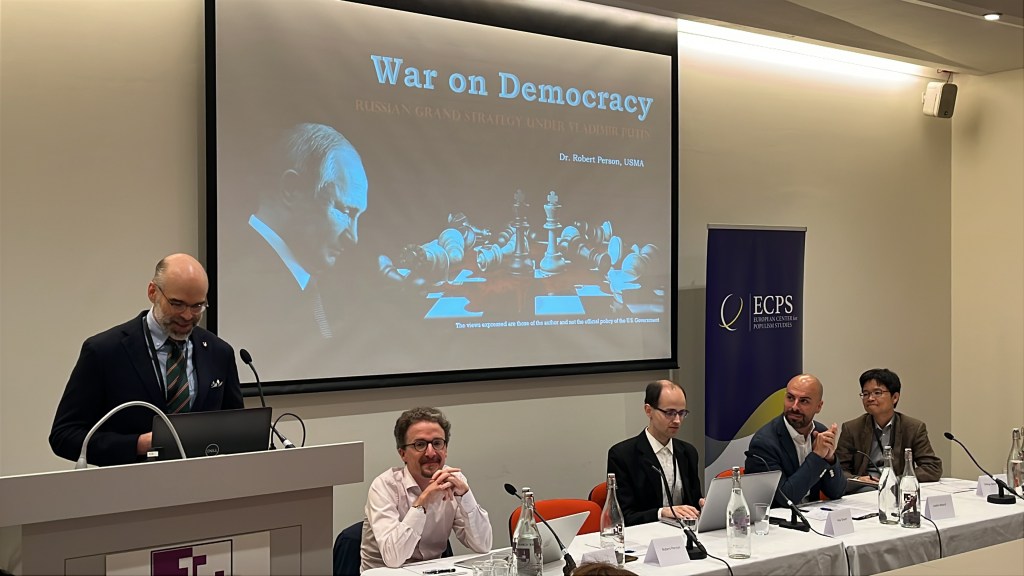
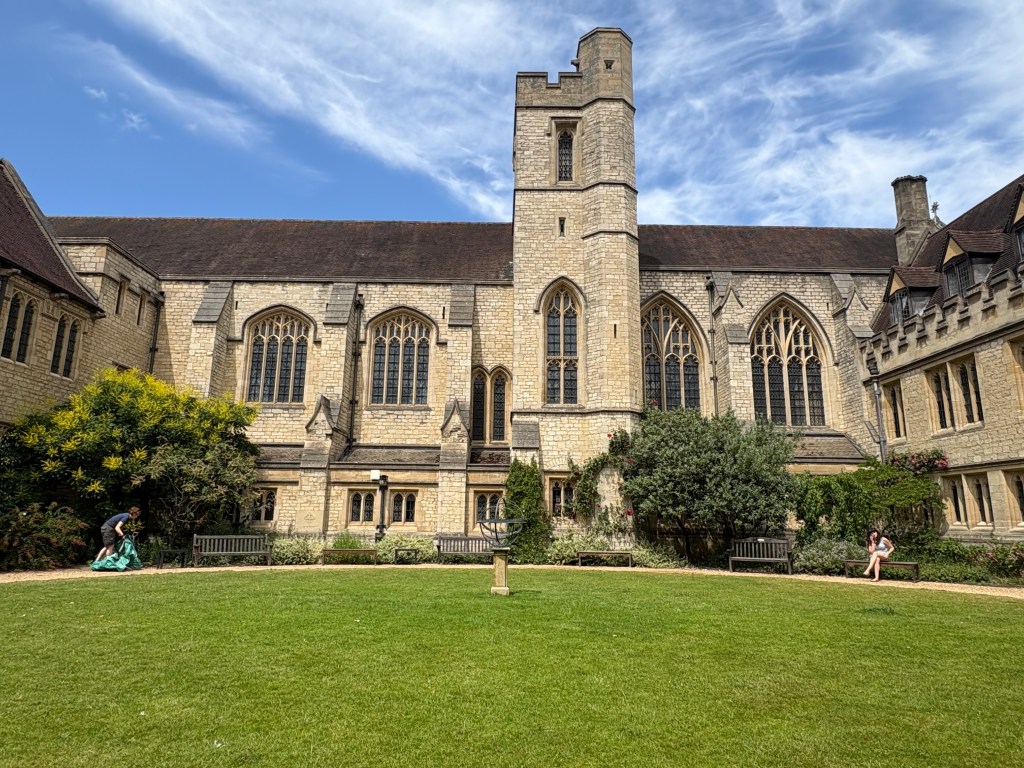
On 3rd July 2025, I participated in an interdisciplinary conference hosted by the European Centre for Populism Studies (ECPS) and the Humanities Division of the University of Oxford, held at St Cross College, entitled ‘We, the People’ and the Future of Democracy: Interdisciplinary Approaches.
The event sought to encourage a wide-ranging and cross-disciplinary conversation on the threats posed by democratic regression and the strategies available to strengthen resilience, with particular attention to transatlantic relations and Europe’s global role.
I was ecstatic to contribute to a panel of distinguished scholars, whose insights enriched my understanding of democracy from multiple angles. I also welcomed the thoughtful feedback I received on my own research and presentation. The panel’s theme was ‘The People’ in Schrödinger’s Box: Democracy Alive and Dead.
My presentation was based on a paper drawn from my doctoral work, examining the intersection of populism and democratic practice in small island nations, with a particular emphasis on lived, embodied political experience. I presented a comparative analysis of Malta and Singapore, drawing on ethnographic fieldwork undertaken in 2024.
The paper, currently under review with the Populism and Politics Journal, explores how populist rhetoric, informal power structures, and symbolic forms of control influence both the durability and decline of democratic values in such contexts. Moving beyond a focus on formal institutions, the study treats democracy as something experienced and enacted in everyday life, shaped by collective memory, dense interpersonal networks, and cultural practices.
In Malta, overt populism and entrenched patronage networks undermine meritocratic principles and transparency, cultivating loyalty that often comes at the cost of democratic integrity. Singapore, by contrast, relies on more subtle forms of populism and a closely managed public sphere, where stability is maintained through internalised norms and behavioural conformity, though often at the expense of civic vibrancy and pluralism.
The research demonstrates how, in small states, these dynamics are intensified: in Malta, politics becomes highly personalised, while in Singapore, social order is reinforced through behavioural regulation. Through a qualitative, ethnographic lens, the project reveals that the health of democracy in such environments is shaped not only by institutional design but also by the everyday experiences of citizens and the informal forces that govern political life.
 Islander Perspective
Leave a comment